Reconciliation: Why It Matters for Your Small Business
Bank and credit card reconciliation ensures your books are accurate — confirming every transaction, catching errors or fraud, and keeping your financial statements reliable. Here's why it's one of the most important things a bookkeeper does for your business.
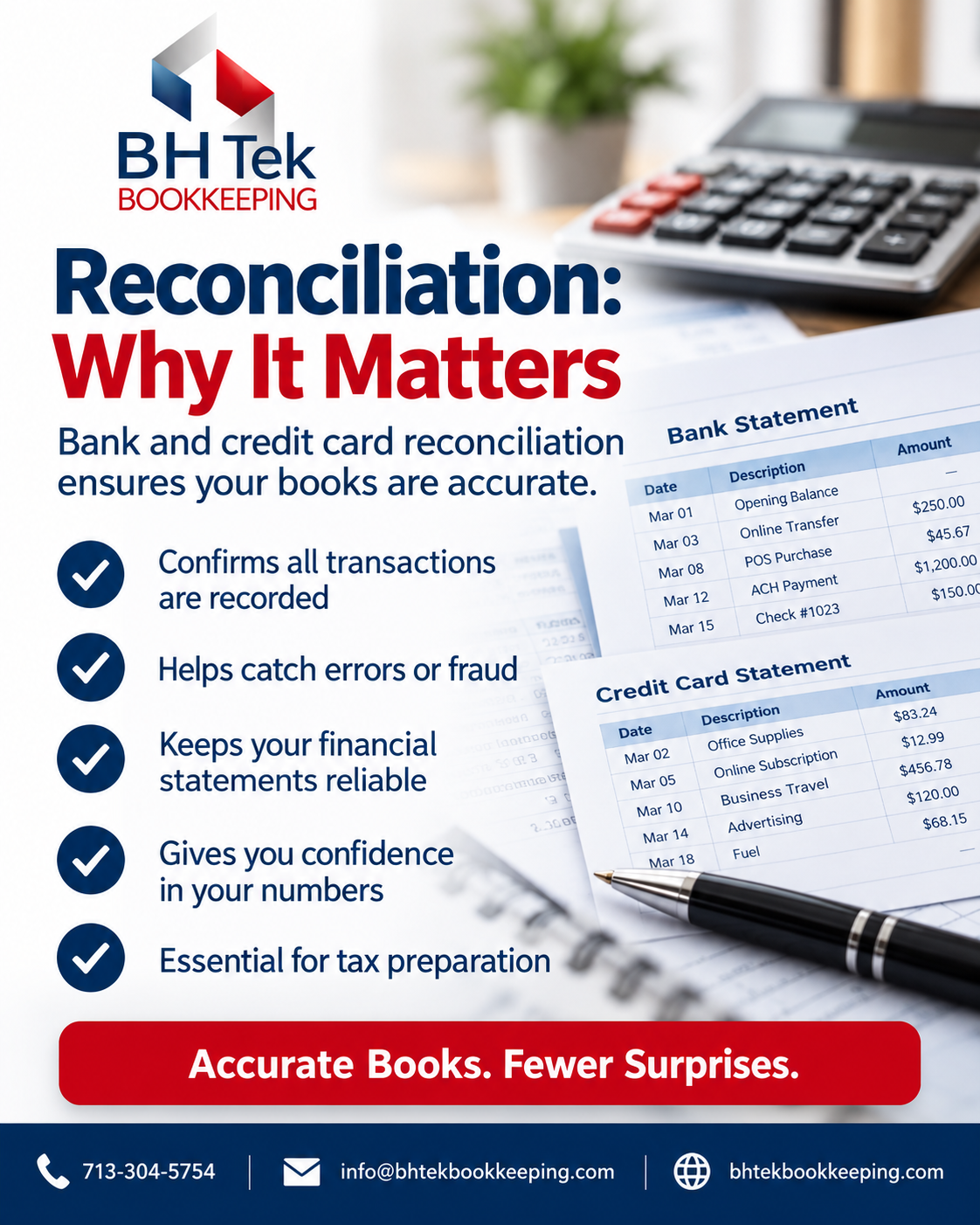
Every month, your bank and credit card accounts record dozens — sometimes hundreds — of transactions. Sales, purchases, transfers, subscriptions, payroll, fees. The question isn't whether those transactions happened. The question is: are they all recorded correctly in your books?
That's exactly what reconciliation answers.
What Is Bank and Credit Card Reconciliation?
Reconciliation is the process of comparing your internal financial records against your bank and credit card statements to make sure they match — down to the penny.
Think of it as a monthly audit of your own books. Every transaction that appears on your bank statement should have a corresponding entry in your accounting software. Every charge on your credit card statement should be categorized and recorded. When the two sides match, your books are reconciled.
When they don't match, something needs attention — and that's actually a good thing to catch early.
5 Reasons Reconciliation Matters
1. Confirms All Transactions Are Recorded
It's easy for transactions to slip through the cracks — a small bank fee here, an automatic renewal there. Reconciliation ensures nothing is missed. Every dollar that moved through your accounts is accounted for in your books.
Without this step, your financial reports are built on incomplete data. And incomplete data leads to bad decisions.
2. Helps Catch Errors or Fraud
Mistakes happen. A vendor charges you twice. A payment posts to the wrong account. An employee makes an unauthorized purchase. Reconciliation is often the first line of defense that surfaces these issues.
The sooner you catch an error or a fraudulent charge, the easier it is to dispute and resolve. Waiting months — or until tax season — makes recovery far more difficult and expensive.
3. Keeps Your Financial Statements Reliable
Your Profit & Loss statement, Balance Sheet, and cash flow reports are only as accurate as the data behind them. If your books haven't been reconciled, those reports may look fine on the surface while hiding significant discrepancies underneath.
Reliable financial statements aren't just good practice — they're essential if you ever need a business loan, bring on investors, or face an audit.
4. Gives You Confidence in Your Numbers
One of the most common frustrations small business owners share is not trusting their own financial reports. They look at the numbers and wonder: Is this right? Am I actually profitable? Do I really have that much in the bank?
Regular reconciliation eliminates that doubt. When your books are reconciled, you can look at your numbers and know they're accurate. That confidence changes how you run your business.
5. Essential for Tax Preparation
Come tax time, your accountant or CPA will need clean, accurate books. Unreconciled accounts mean your tax preparer has to do extra work — and extra work means extra fees. Worse, undetected errors can result in incorrect tax filings, which creates risk you don't want.
Monthly reconciliation means tax season is just another month, not a scramble to clean up a year's worth of discrepancies.
How Often Should You Reconcile?
Monthly — without exception. Reconciling once a month keeps discrepancies small and manageable. The longer you wait, the harder it becomes to trace errors back to their source and the more transactions pile up to review.
Many business owners put reconciliation off because it feels tedious. That's exactly why having a professional bookkeeper handle it is so valuable — it gets done consistently, correctly, and on time.
What Reconciliation Looks Like in Practice
Here's a simplified example of what a monthly bank reconciliation covers:
| Date | Description | Amount |
|---|---|---|
| Mar 01 | Opening Balance | $250.00 |
| Mar 03 | Online Transfer | $45.67 |
| Mar 08 | POS Purchase | $1,200.00 |
| Mar 12 | ACH Payment | $150.00 |
| Mar 15 | Check #1023 | — |
Each of these entries gets matched to a corresponding record in your accounting software. Any item that doesn't match gets flagged and investigated before the month is closed.
The same process applies to your credit card statements — office supplies, subscriptions, travel, advertising, fuel — every charge gets reviewed, categorized, and confirmed.
Accurate Books. Fewer Surprises.
That's the promise of consistent reconciliation. Not just clean books for tax season — but a clear, accurate picture of your business finances every single month.
At BH Tek Bookkeeping, reconciliation is a core part of what we do for every client. We handle it monthly so you never have to wonder whether your numbers are right.
Ready to get your books reconciled and keep them that way?
📞 713-304-5754 | ✉️ [email protected] | 🌐 bhtekbookkeeping.com
Schedule your free 20-minute consultation and let's talk about what accurate books can do for your business.
Explore Topics
Written by
Jeremy Racicot
Content creator and writer sharing insights and stories.